In this article we want to speak about our journey across Australia – everything from planning, buying a van, free camping, finding water, best routes, unexpected challenges and the reality of life on the road. Click on the section that most interest you or scroll down to read the all article.
- Planning the Big Lap
- Camping in Australia
- Showers & Toilets
- Water in Remote Areas
- Internet, Phone & Radio Reception
- Top 5 Places
- The Reality of Vanlife in Australia
Planning the Big Lap
The Route
Ok, starting from the basic…how do you actually plan the all thing? Well, we didn’t really. We knew we wanted to do the all lap but we didn’t really have a defined plan or route in mind.
Our personal recommendation would be follow the climate! Australian’s summers can be extremely hot, particularly if you live in a van (which is essentially a metal box) that, most of the time, does not have air-conditioning unless you are driving. Also, summer is the wet season in the northern part of Australia, which means that it’s hot, very humid, there might be floodings and many roads might not even be accessible.
As general rule, try to stay around the southern coast in summer and head north in winter. Having said that, be prepared to struggled with the heat sometimes. We were in Adelaide around January and there were 45 degrees during the day and 35 degrees inside the van at night…just to give you an idea.
We bought the van in Sydney in September, it was fairly cold so we decided to head north all the way up to Noosa. There we stopped to then head back south towards New South Wales first and South Australia after. This time we did not travel to Victoria, as we had already been there four years prior (read our dedicated article). There is not perfect or ideal route but remember, the climate is quite extreme in Australia, treat it with respect or you will regret it…
The Vehicle
Types of vehicles
When it comes to planning the Big Lap, the other important thing to think about is the kind of vehicle you want. After almost a year on the road in Australia and after speaking with a lot of people, here is a little list of vehicle options you have (from the cheapest to the most expensive) with pros and cons:
- Car – Some backpackers would only have a car and live inside it full time.
- Pros: It’s the cheapest option… can’t think of any other…
- Cons: It’s small, it’s uncomfortable, not good when it rains, you would still live inside a car for a full year…
- Overall: Not recommended for the lap, might be ok for a few months
- Car with rooftop tent – This is the upgraded version of the car, a lot of young people would go for this option
- Pros: It’s cheap, if it’s a 4WD car you can go travel along tracks or on beaches, it looks cool
- Cons: It’s small, not great with rain, not easy to dry, there can be A LOT of annoying flies in remote area, we were told that many had mould inside because of the condensation
- Overall: Ok for big lap on a tight budget but be aware that in some parts will be uncomfortable (flies and rain are the two main problems)
- Small van – Most young people will choose this option and will specifically buy a Toyota Hiace
- Pros: Cheap van, easy to fix/find parts, you live in a van
- Cons: It’s small, you cannot stand inside, not much water, you still need to eat outside (flies and rain)
- Overall: Ok for the lap if you want to experience the vanlife without spending too much
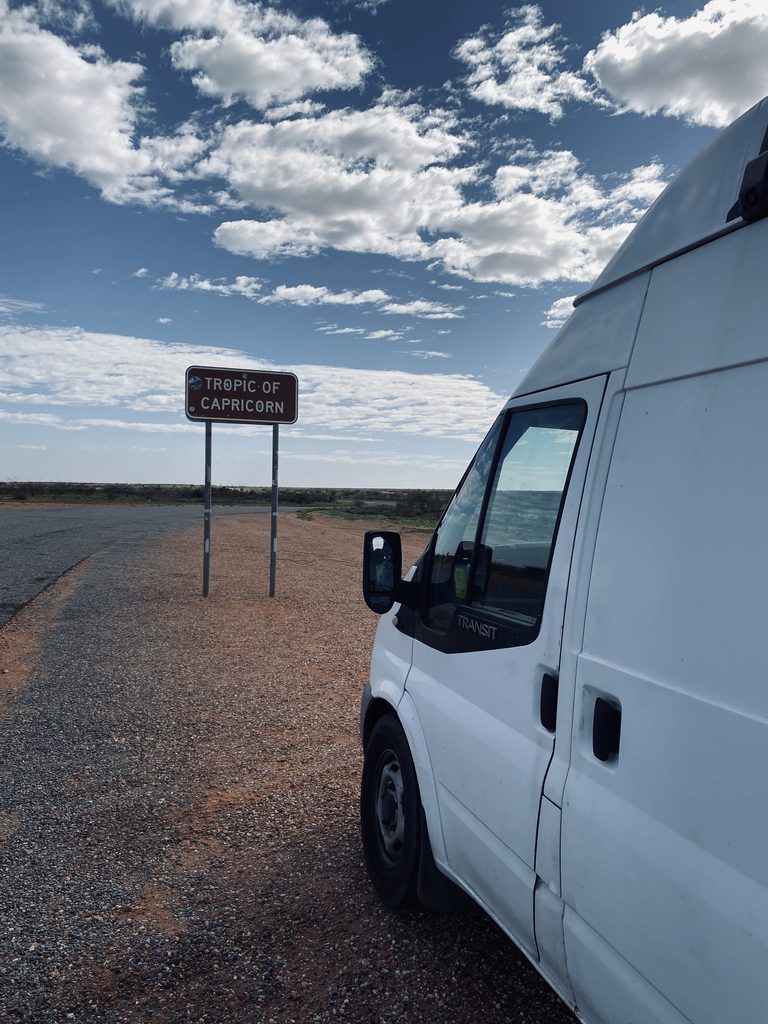
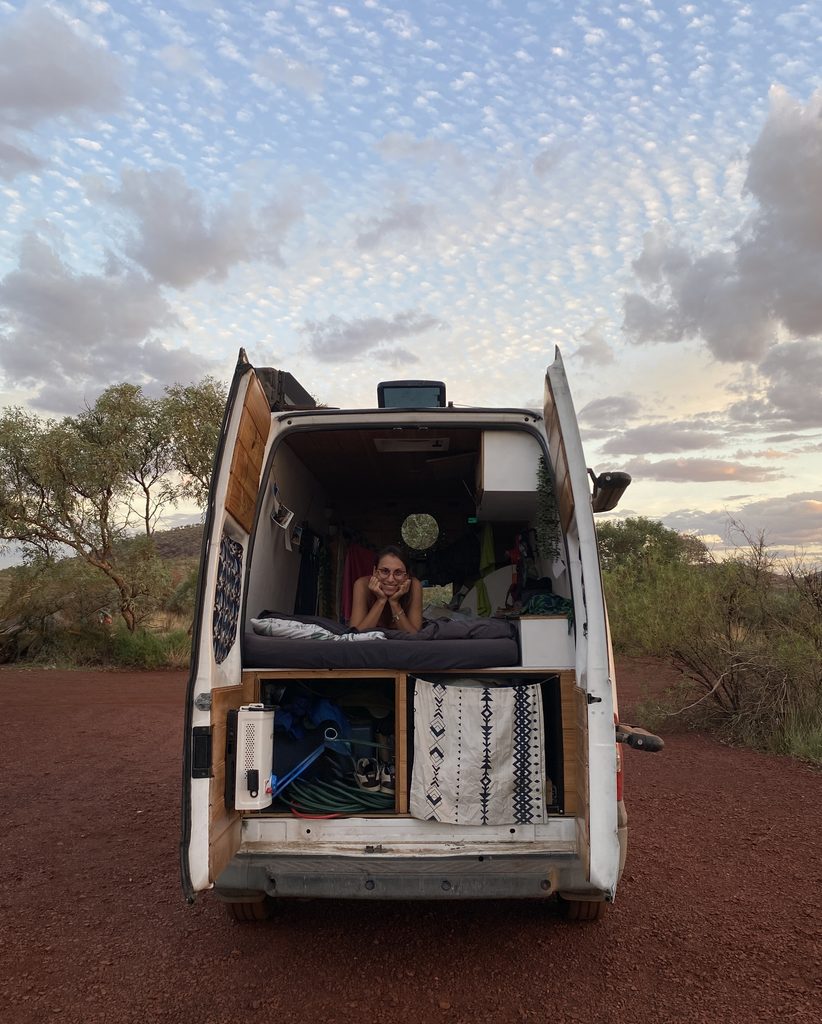
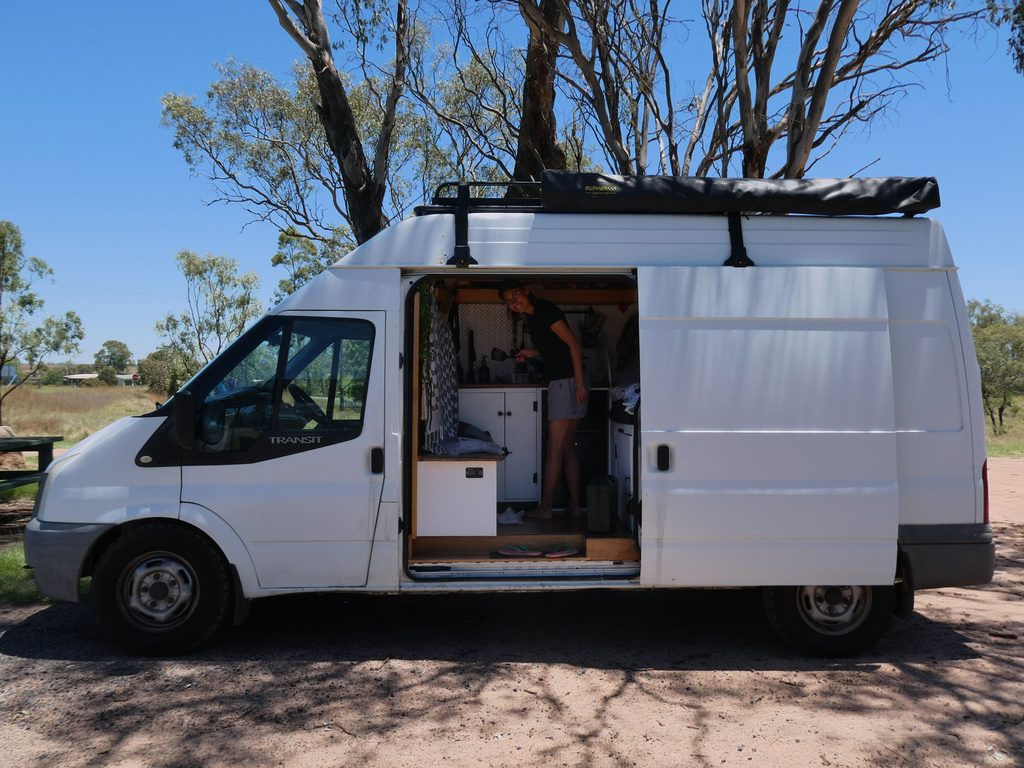
- High roof van – This is what we chose and we bought a 2008 Ford Transit
- Pros: You can stand inside, you can cook inside, you live in a van
- Cons: It’s more expensive to buy and fix, fuel consumption is higher, most of the time you cannot go super remote
- Overall: Good if you want to do the lap with a minimum of comforts without spending a fortune
- Caravan + Car – This is the setup of most Australians
- Pros: Comfortable, plenty of space and storage, you can disconnect the caravan and use the car offroad if it is a 4WD
- Cons: It’s very expensive, connecting/disconnecting the campervan every time is a pain, not suitable for small roads (although there are not many in Australia)
- Overall: Very good if you have the budget
- Bus converted campervan – Some Australians had this setup, mostly families
- Pros: Comfortable and plenty of space
- Cons: It’s hard to drive around, expensive to fix
- Overall: Very good but it’s sometimes limiting. Some people towed another vehicle….
- Motorhome – Few Australians had this
- Pros: Comfortable, plenty of space, hassle free
- Cons: It’s prohibitively expensive to buy and to fix
- Overall: The best if you have the money but generally not good offroad
We learned that Japanese vehicles are the easiest ones to fix/repair because mechanics are familiar with them and parts are widely available. Ford is generally ok, particularly if it’s a newer model, but few mechanics are not familiar with Transits. European vehicles can be a pain because mechanics might not be familiar with them and parts are hard to find (Mercedes might be an exception but parts are very expensive).
Where to Buy the Vehicle
We bought the vehicle on Facebook marketplace in NSW, the process was very easy but it is probably not the best state where to buy the vehicle. Indeed, you need to pay taxes when you purchase the vehicle, you need to get a roadworthy certificate in NSW each year for vehicles older than 5 years (also known as pink slip) and vehicles in Sydney are generally more expensive.
From what we were told, Western Australia is the best one. It’s easy, not roadworthy certificate (so it’s cheaper) and vehicles in Perth are generally cheaper.
What to check when you buy a vehicle
Generally speaking we recommend you doing a pre purchase inspections with a mechanic unless you have a good knowledge of cars. It is very easy, you don’t need to be there while the mechanic inspect the vehicle, you pay and that’s it. NRMA pre purchase inspections are generally quite reliable.
It is also important to make sure there is not major rust under and on top of the vehicle. We spoke with some people who had to fix major rust problems. It’s expensive, time consuming and it will affect the selling price of the vehicle if you don’t do it properly.
It is not absolutely necessary but having the cruise control can be very handy for the long Australian drives or else, you might suffer from foot cramps after days of long drives.
Finally, even if the vehicle is in good external and mechanical conditions, if you want to do the lap we strongly recommend you improving the reliability of the vehicle and carrying with you spare parts because, if something happens in the middle of nowhere, you are really really in trouble. Before starting the lap, we preventively changed some parts and carried the old ones with us. If you have a breakdown in remote areas, getting towed out of them and having your car fixed is prohibitively expensive (we saw a lot of travellers having breakdowns and a shocking amount of abandoned car along the road) so be aware…
Buy vs Hire a Vehicle
It all depends on how long you want to travel. If it’s only for a few months or you want peace of mind, maybe buying is not worth the hassle (and the responsibility if something goes wrong) but if it’s for an extended period of time and your van allows you to be completely off grid then buying the van is generally more convenient.
Having saying that, we met a lot of people who had very bad mechanical issues and lost all their money. If you want to complete the lap, we don’t recommend you buying the cheapest vehicle unless you are prepared to lose everything and not being able to make it.
Vehicle Insurance
We found that most cheap/middle budget vans in Australia are NOT registered as campervans. Generally speaking it is not a problem because the police doesn’t check that but if you have a car accident the insurance might not cover you. To be registered as campervan you need to have an engineering certificate which is quite expensive. Other than driving slowly, we recommend you making sure that the weight of the vehicle is within the recommended GVM because police occasionally checks that.
We also recommend you having a roadside assistance if you want to go remote. If you have a breakdown in the middle of nowhere, DO NOT leave your vehicle, call the roadside assistance (or wait for somebody to give you a lift to the next town if there is not reception) and wait to have your vehicle fixed on the spot or towed out of there.
The Cost
Travelling in Australia is not cheap and when it comes to budget how much you are going to spend, that’s when most people decide not do to the lap, understandably. Overall, for us it was not too bad but it was still quite expensive. However, we were lucky because we both worked along the way with two qualified jobs. Indeed, Guido worked as travel nurse in various cities while Giulia ran her Italian teaching business from the van.
To live we spent around 1000AUD/week all included (diesel, car maintenance, activities etc etc) between the two of us, which is roughly 70 AUD per person per day. The budget mentioned does not include the cost of purchasing the car, as this can be extremely variable according to the type of vehicle you decide to buy.
The problem is that, at the very beginning, we had to invest quite a few thousand dollars between purchasing the van/taxes/replace parts etc etc and we didn’t know if it would work out eventually or not. Realistically, if something goes really wrong you might lose everything, so it’s a trip with a high level of risk but it’s definitely worth it if you make it. The budget was medium/comfortable, which means that we didn’t go to many campsites but we didn’t save on activities/concerts/occasional beers at the pub or restaurants.
Overall, if you have a lifestyle and a van similar to ours, expect to spend around 50-60k AUD for one year in two people including the cost of the car after selling it.
Camping in Australia
There are many good things of Australia and one of them is, for sure, free camping. There are several apps you can use to find where to camp for free, we used campermate and we have never had any major problem with that.
Campsites are also widely available but we hardly paid for any, as our vehicle was completely off grid. The only campsites we paid for were the ones inside the national parks. In cities we slept in the street but be mindful that it’s not always legal and people might complain. Keep a low profile.
Showers & Toilets
Public toilets are widely available and fairly clean. Part of the vanlife experience is going to every possible public toilet in the country, is it not for you? Then think twice before buying a van. We did have a portable toilet inside the van but we used it only for emergency situations.
Public showers are also very common (you can locate them on campermate), although they are often cold. Our plan B was going to swimming pools if there wasn’t any shower available around us and you can usually pay just a few dollars for the shower. We were able to shower every other day throughout the all lap so it wasn’t a major problem.
How to Access Water in Remote Areas
If you go to a campsite, they normally have water available and you can fill up your tank there. However, in our case, we mostly went to water stations, petrol stations (they often have water taps for emergency) or public parks. We had a long hose with an adapter that we could attach to any water tap, you can buy both these things at any Bunnings if necessary.
We had a big 120L water tank on the back of the van, many other cheaper/smaller vans do not have as much water. We strongly suggest you storing a lot of water in case something goes wrong and you get stuck in the middle of nowhere with 45 degrees outside…you never know…
Internet, Phone & Radio Reception Along the Way
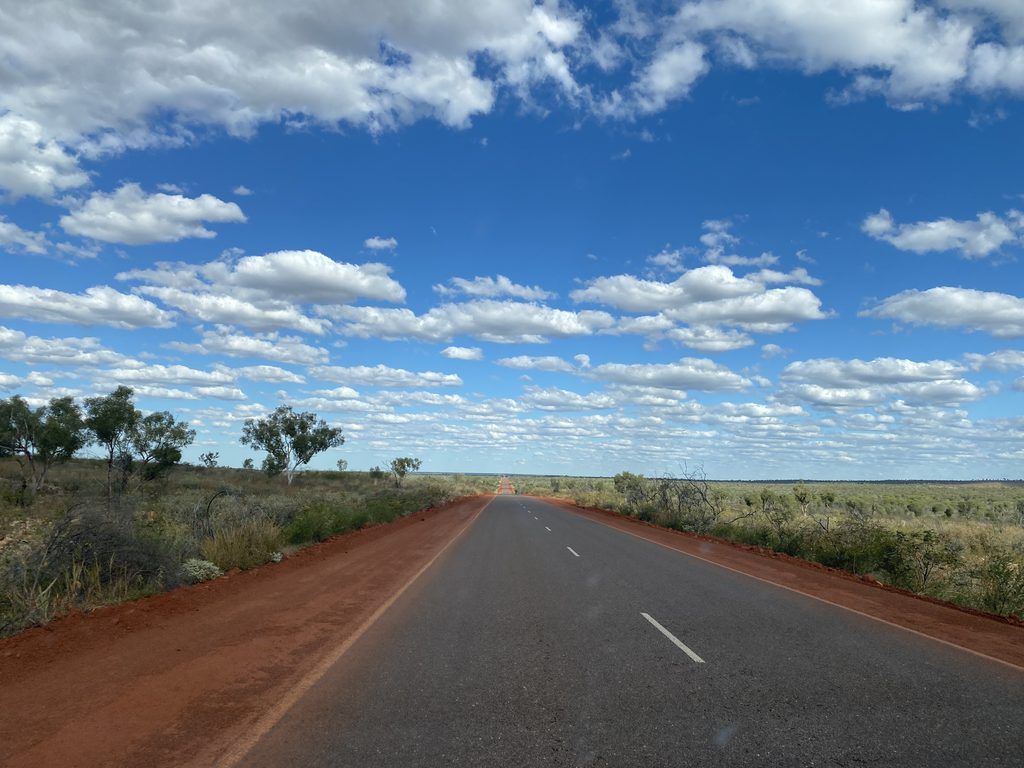
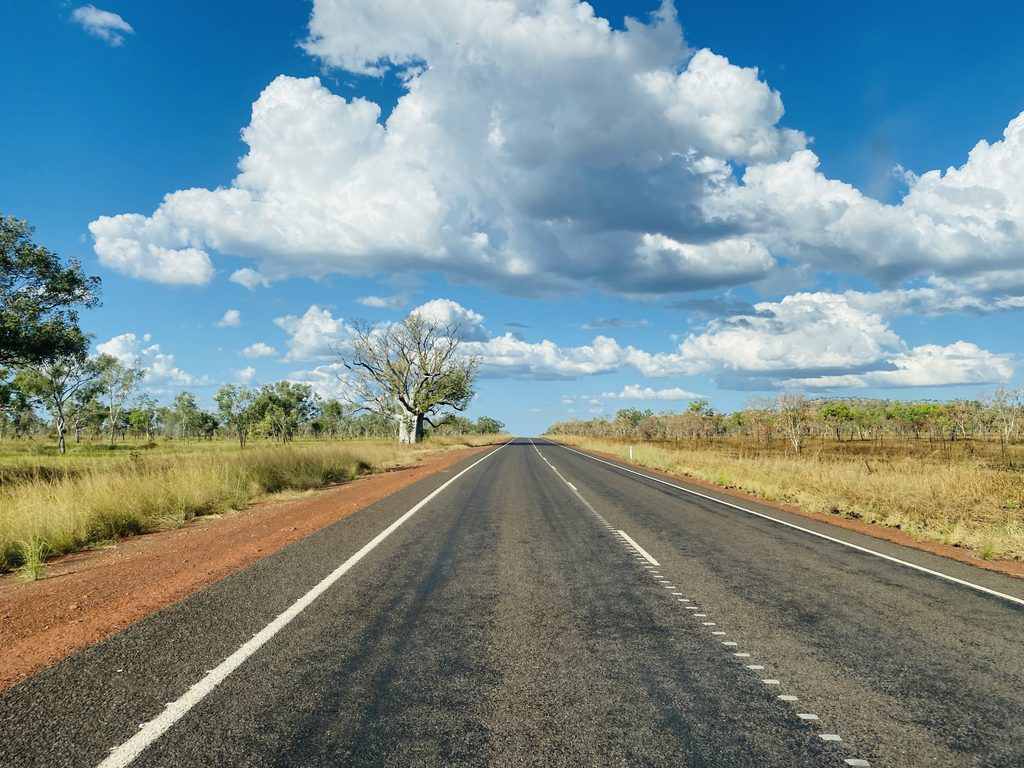
We initially thought we would need satellite internet but, in reality, if you mostly travel along sealed roads you won’t probably need it. However, in many places reception can be very poor so if you need to work online you will probably have to travel to the closest town, which might not be very close. Generally speaking, Telstra seems to be the most reliable provider for remote areas but also the most expensive.
When it comes to phone reception, once you leave rural towns you generally don’t have any phone or radio reception until the next town. Download a lot of audiobooks and music or you will have to drive for hours without any entertainment.
Top 5 places Along the Lap of Australia
These are, in our opinion, the best places we visited along the lap:
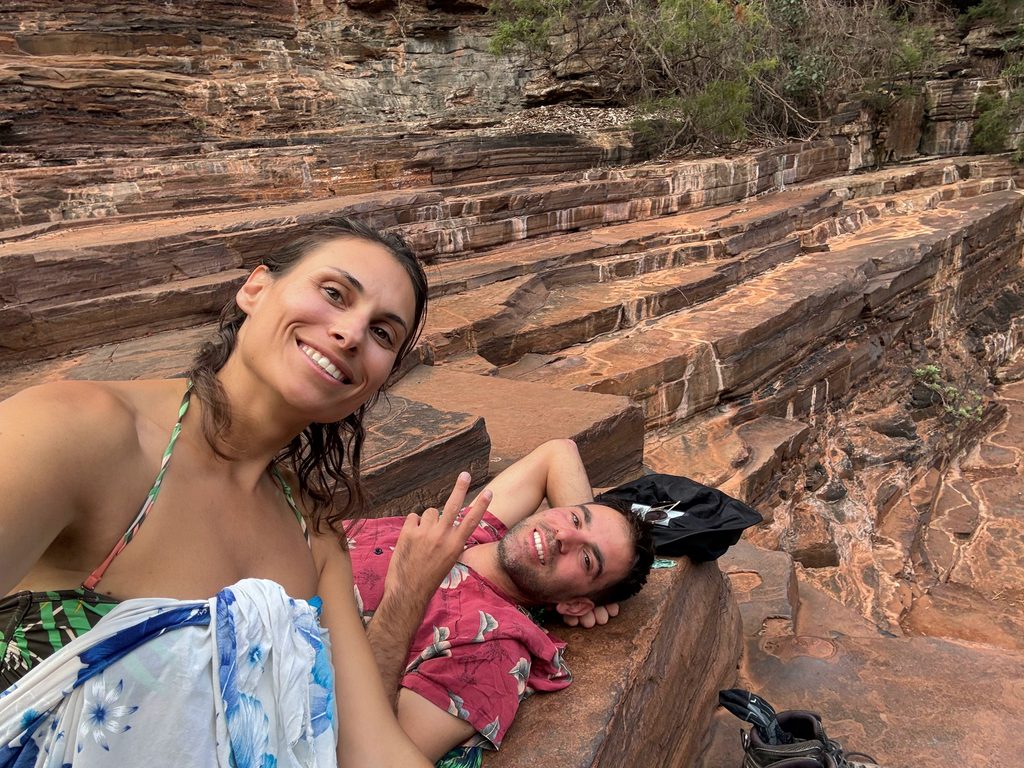
- Karijini National Park (WA) – Simply the best… just make sure you go there when there is still water (around May is ideal).
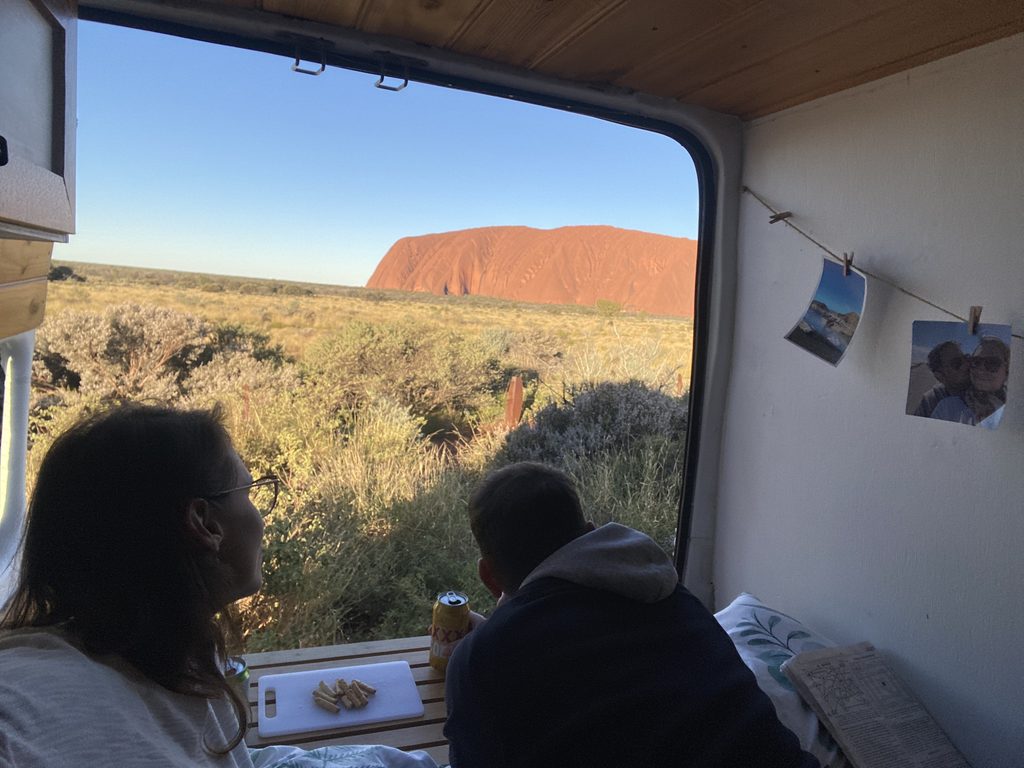
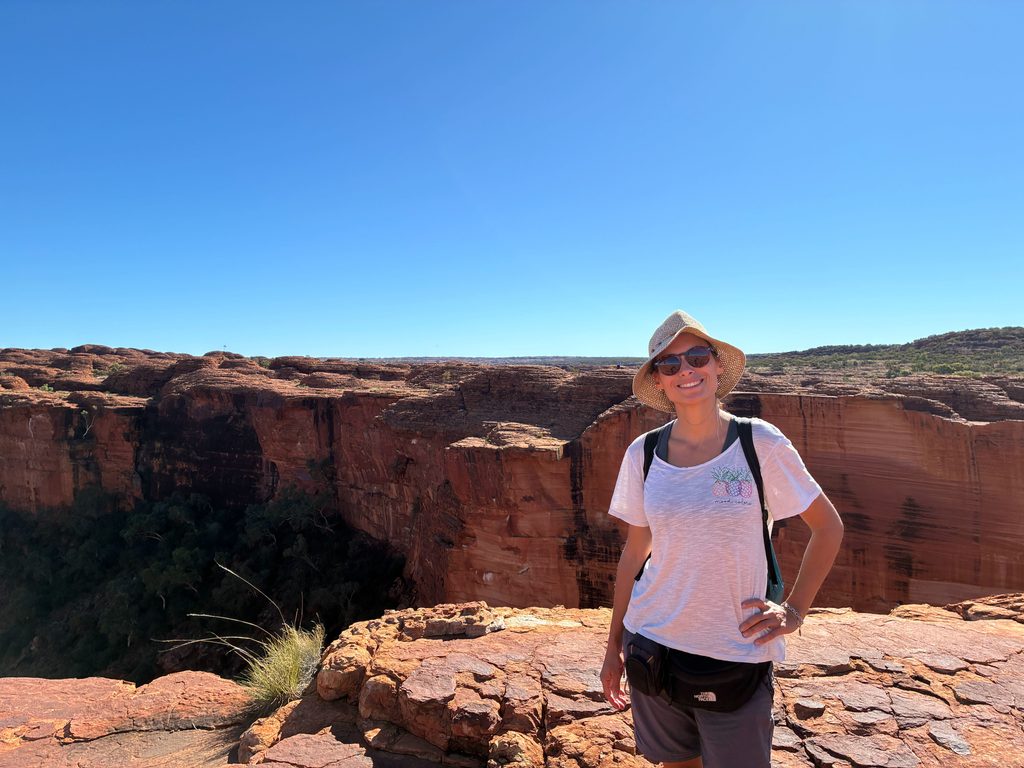
- Uluru & Kings Canyon (NT) – Just the sunset on Uluru is worth the trip… Simply stunning!
- Exmouth (WA) – Amazing beaches and an incredible experience swimming with whale sharks.
- Far North Queensland – Lush tropical forest, weird tropical fruits, strange animals and the Great Barrier Reef.
- Esperance (WA) – Stunning white sandy beaches.
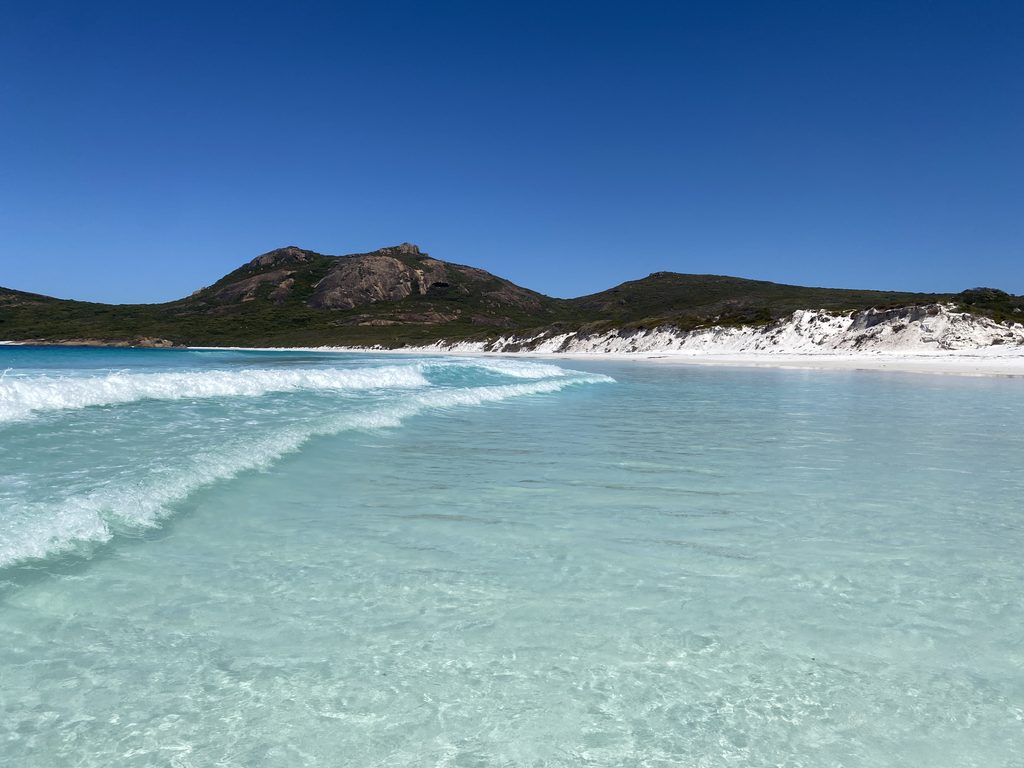

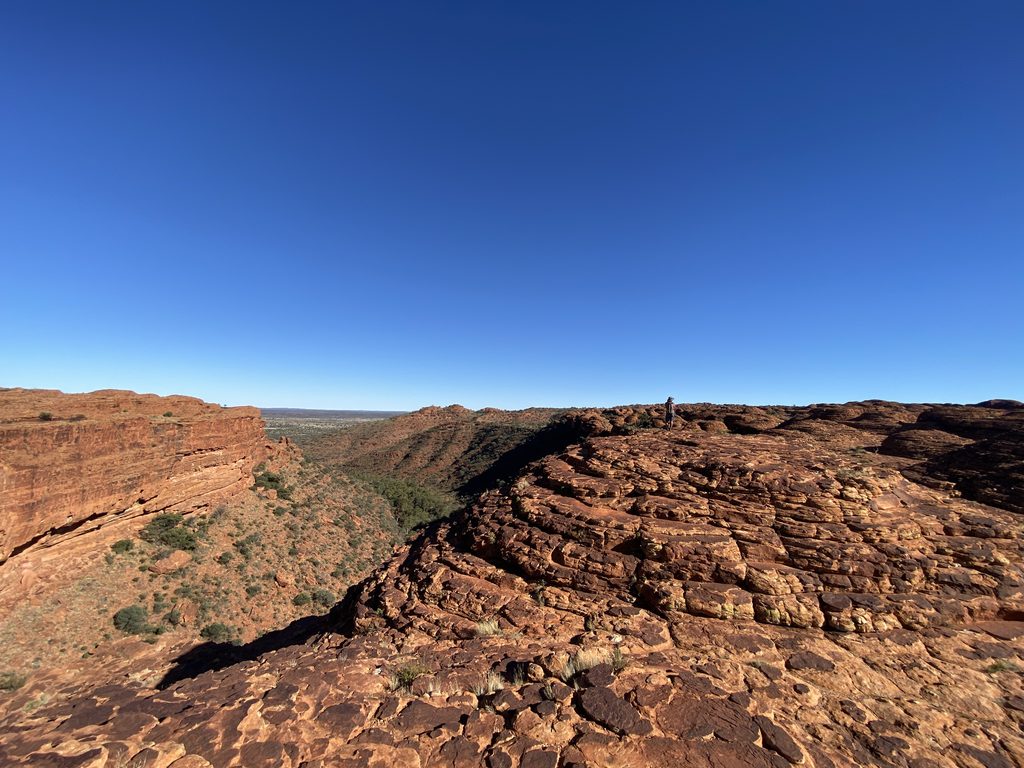
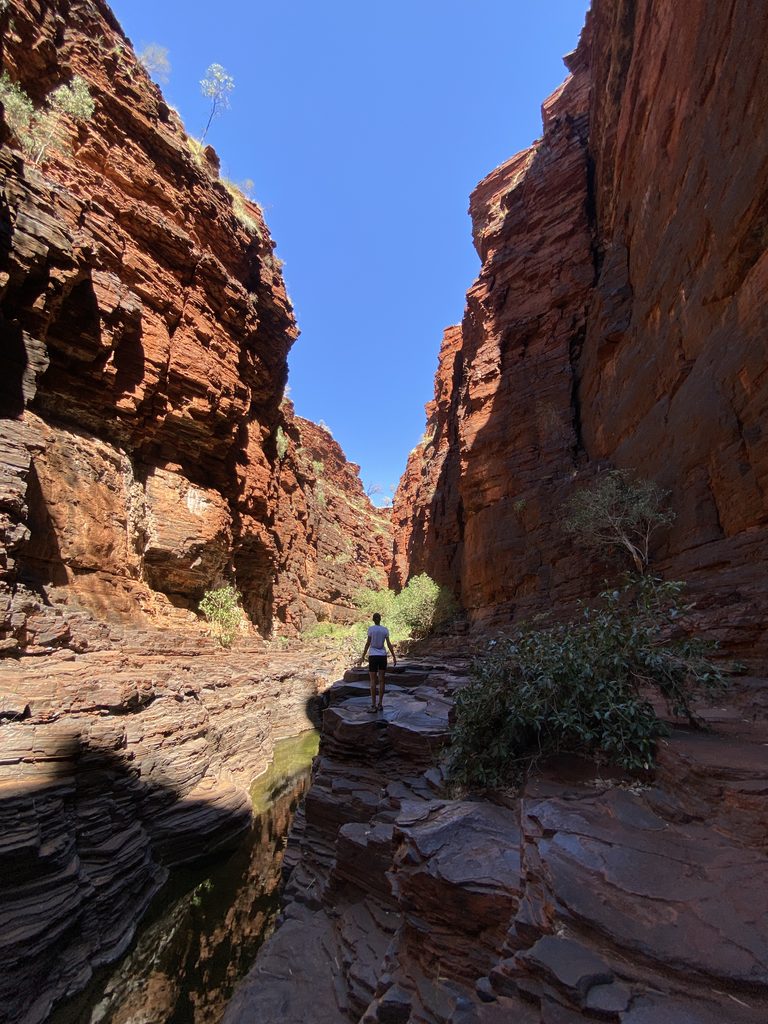
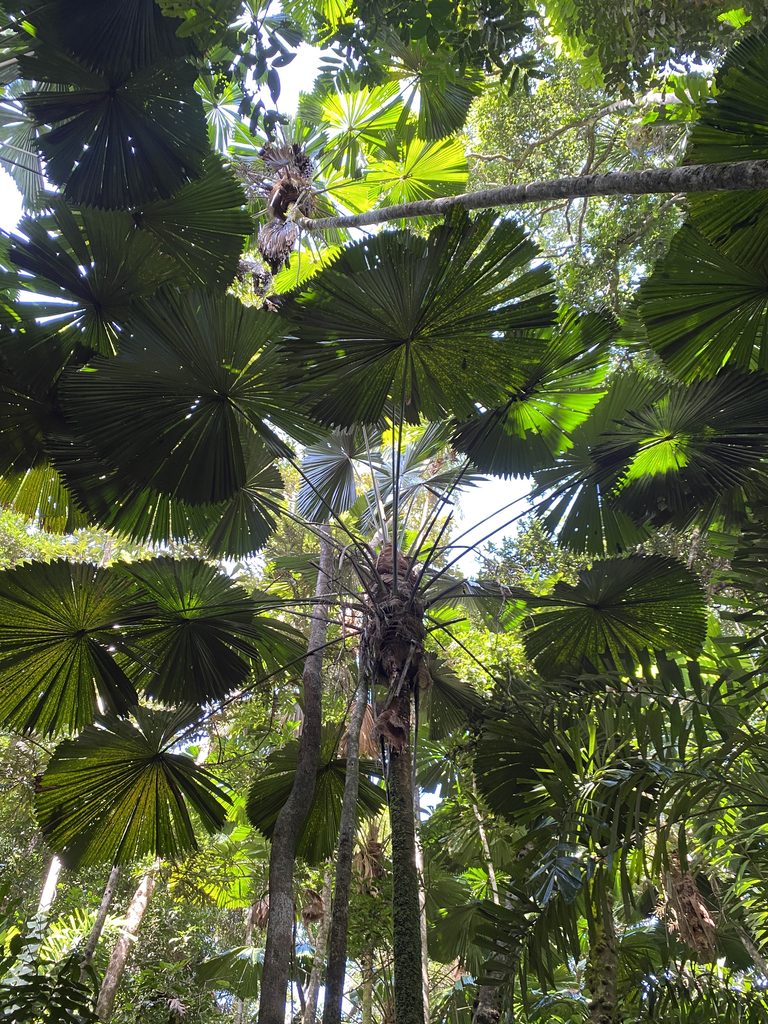
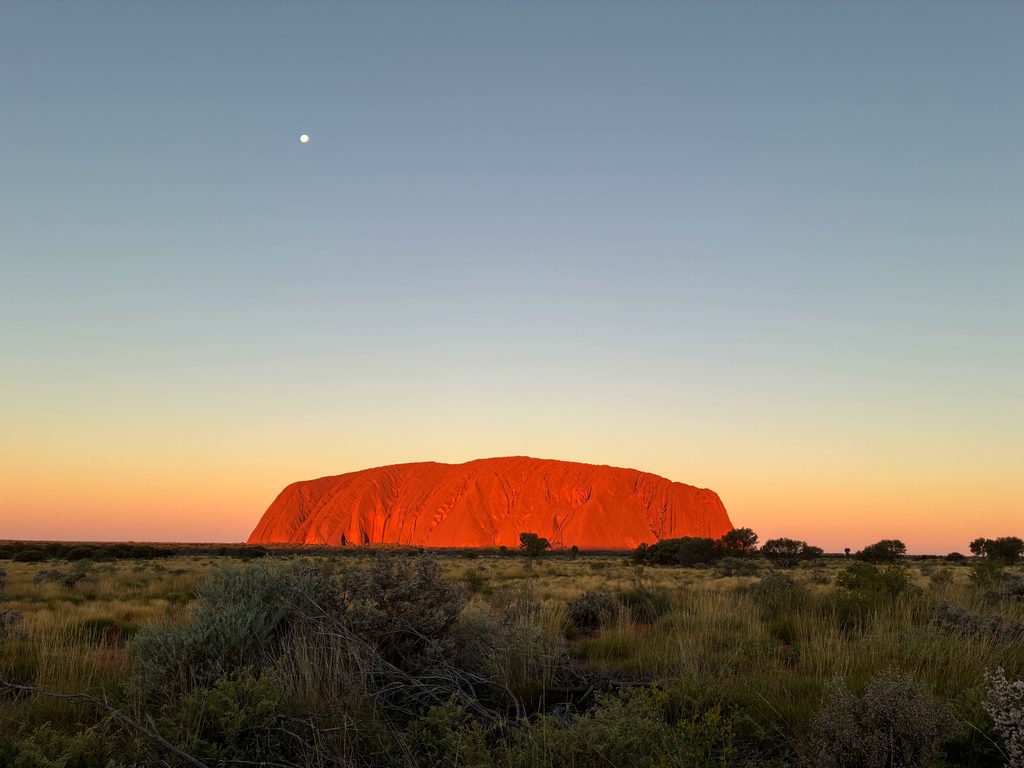
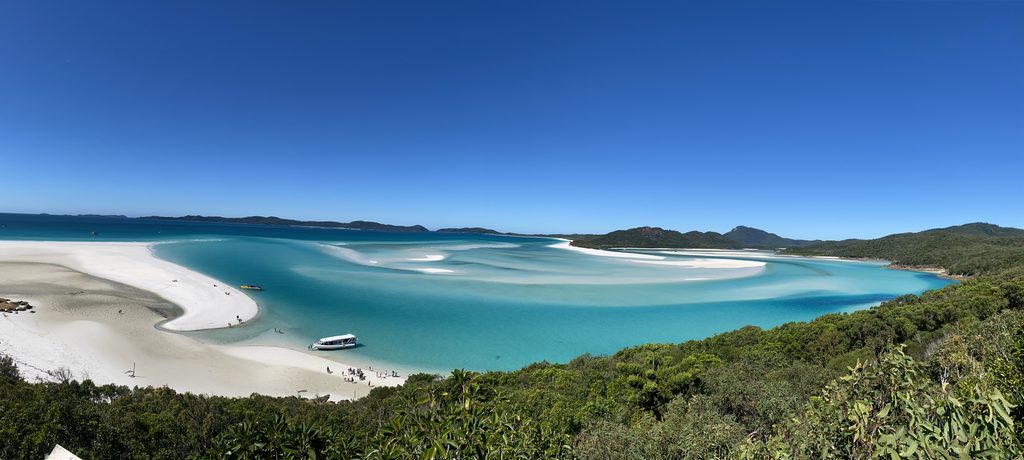
Out of the top 5 but still worth mentioning are Ubirr (NT), Whitehaven Beach – Whitsundays (QLD), Eyre Peninsula & Nullarbor (SA).
Vanlife in Australia – The Reality Nobody Speaks About
Completing the lap of Australia in van was, so far, our longest continuous trip. It was an incredible experience, we strongly recommend you but we also advise you that it doesn’t come without challenges.
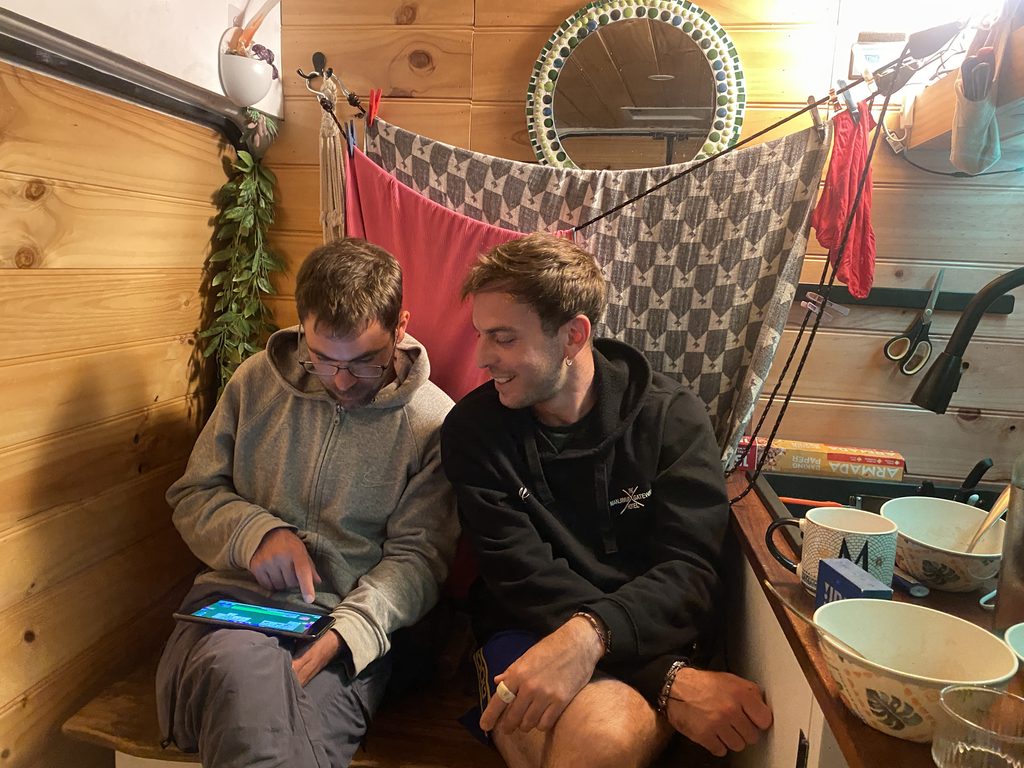
Although it might sounds cool and romantic, we found ourselves arguing more than usual because we spent a lot of time together, we didn’t have any privacy, we didn’t have friends around, we didn’t have enough vital space and often the external conditions didn’t help (it is super hot and you still live in a van). Overall we survived as a couple and it made us stronger but it is definitely a challenge and some couples don’t cope with that. As long as things go well, generally speaking, it’s ok but when you have a problem (mechanical issues, you don’t find a job etc…) then, you find yourself arguing a lot more.
Sadly, we didn’t find any young person doing the lap and, although we occasionally travelled with some other guys, most of the time we were either alone or we met Australian “grey nomads” along the road. The reality is that it’s an expensive trip and it takes a lot of time so most young people can’t afford to do it. We were lucky because we could travel and work with maximum flexibility. Most of our social life was in towns/cities along the road.
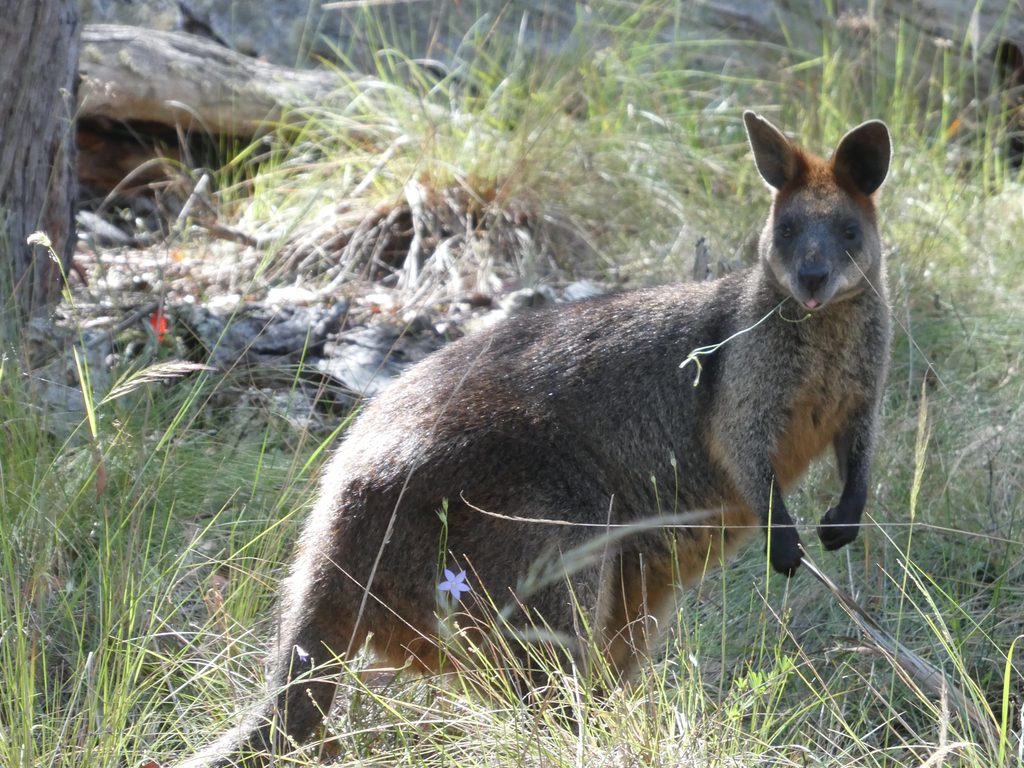
Australia is also well known for its wildlife. Thankfully, we didn’t find any big spider or snake inside the van but it can happen and you need to be able to cope with that. For part of the lap, there was one (or more) red back spider travelling with us under the van… We realised that because we found its spider web every morning under the van and we decided to simply call it “Reddy” hoping it would not decide to come inside the van. However, the most annoying animals in Australia are, by far, flies. They are a lot, they are annoying, they go everywhere and in some places it’s impossible to stay outside. A mosquito net is essential!
Strangely enough though, we got two mice inside the van that we had to get rid off very soon because we were worried they might eat some electric cables.
Are you still convinced you want to do the Lap of Australia after all this? Get your sun cream, sunglasses, surfboard and get ready for the adventure down under!